
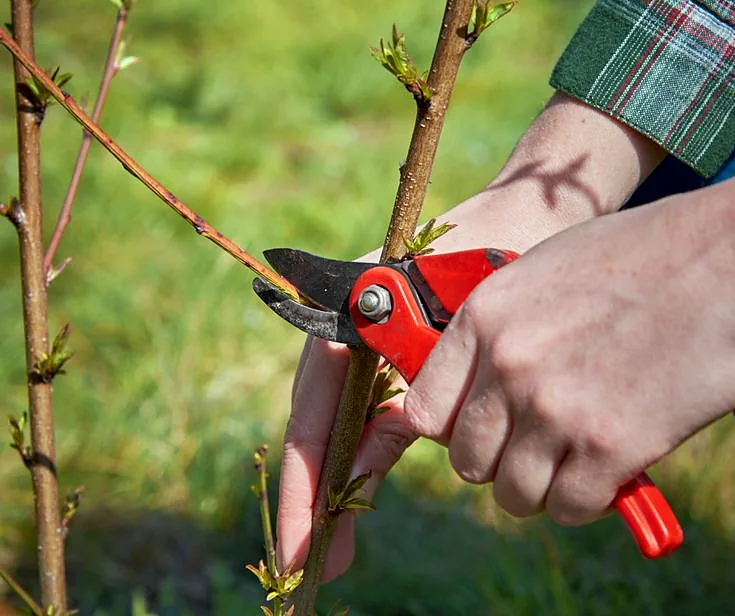
Start with plant identification
The safest fall-cleanup decisions begin by knowing what is in the bed. Peonies, phlox, roses, lavender, hydrangeas, ornamental grasses and Japanese maples all have different needs. A mature garden should be walked before tools come out.
Remove diseased or collapsing material first
Dead annuals, broken stems and clearly diseased foliage are usually the easiest decisions. Removing problem material improves appearance and can reduce the amount of unhealthy plant debris overwintering in the bed.
Do not automatically prune flowering shrubs
Many shrubs set next year’s flower buds on older wood. Aggressive fall pruning can remove the very growth that would flower next season. Hydrangeas are a classic example: the correct pruning approach depends on the type of hydrangea, not simply the season.
Perennials can be selective
Some perennials are commonly cut after frost once the top growth collapses. Others can remain for seed heads, winter shape or habitat. Ornamental grasses are often especially attractive left standing through winter and cut back before spring growth begins.
Protect crowns and roots, not just stems
Winter preparation is often more about the root zone than the top of the plant. Clean beds, appropriate mulch depth, drainage and avoiding piles of wet debris directly over crowns can matter more than making every stem disappear.
Walk the garden before the work
For established gardens, a quick property walk-through is valuable. It lets the homeowner and crew agree on what stays, what goes and which plants need special attention before anything is cut.